Naive Bayes

Naive Bayes is a very popular Supervised Classification algorithm. This algorithm is called “Naive” because it makes a naive assumption that each feature is independent of other features. It is near to impossible to find such data sets in real life. Bayes’ theorem is the base for Naive Bayes Algorithm….

Continue reading

Logistic Regression

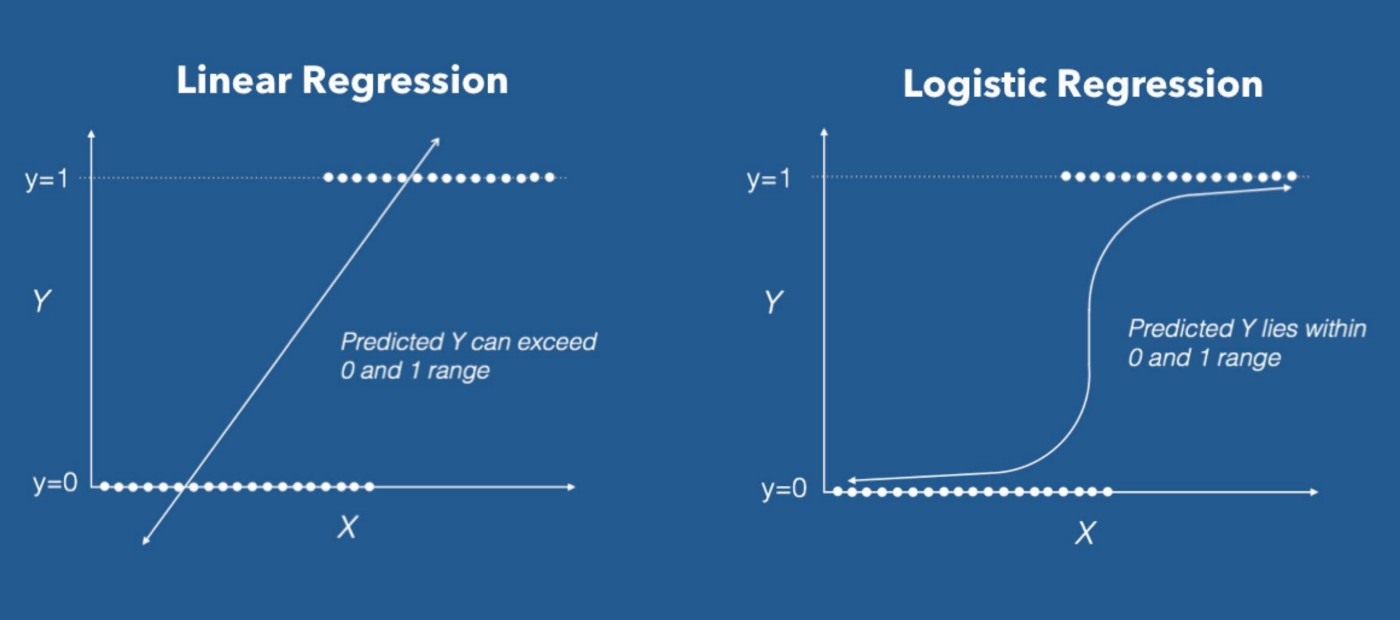
Logistic Regression is a supervised classification algorithm that is used to predict the probability of a categorical dependent variable using a given set of independent variables. It is a predictive analysis algorithm and based on the concept of probability. The most common use of logistic regression models is in binary classification problems. Some…

Continue reading

Gradient Descent

Gradient Descent is an optimization algorithm used to find the values of the parameters of any function that minimizes the cost function. The average difference of the squares of all the predicted values of y and the actual values of y is called a Cost Function. It is also called…

Continue reading

Linear Regression

Linear regression is a supervised machine learning algorithm used for modeling the relationship between a dependent variable and one or more independent variables by fitting a linear equation. I would like to say it is the starting point of anyone’s ML journey! Linear regression is the simplest and most widely…

Continue reading

Confidence Intervals

A confidence interval is a range of values we are fairly sure our true value lies in. It is calculated from the sample data and gives an interval estimate, as opposed to a point estimate. The confidence level, often expressed as a percentage (e.g., 95% or 99%), quantifies the level…

Continue reading

Key Statistical Tests

In the world of data science, statistical tests play a crucial role in drawing meaningful insights from data, making informed decisions, and validating hypotheses. Let’s explore five essential statistical tests: the Z-test, t-test, chi-squared test, ANOVA, and the lesser-known but powerful Fisher’s Exact Test. 1. Z-test: Unleash the Power of…

Continue reading

Hypothesis Testing

Hypothesis testing is a method statisticians use to make decisions or inferences about populations based on sample data. Hypothesis testing is a core concept in statistics that allows us to make informed decisions based on data. It’s a structured, methodical way to put our claims to the test, demanding evidence…

Continue reading

Heteroscedasticity

A random variable is said to be heteroscedastic when different subpopulations have different variabilities (standard deviation). One of the basic assumptions of linear regression is that the data should be homoscedastic, i.e., heteroscedasticity is not present in the data. Due to the violation of assumptions, the Ordinary Least Squares (OLS) estimators…

Continue reading

A/B Testing

A/B testing is a basic randomized control experiment. It is a way to compare the two versions of a variable to find out which performs better in a controlled environment.  A/B testing is also known as bucket testing or split-run testing Suppose we want to add some functionalities to an existing product. A/B testing…

Continue reading